Morning: starting the day calmly
Water, daylight and movement in the first hours — three simple steps that support focus during the day and sleep at night.
Denis Čurčić
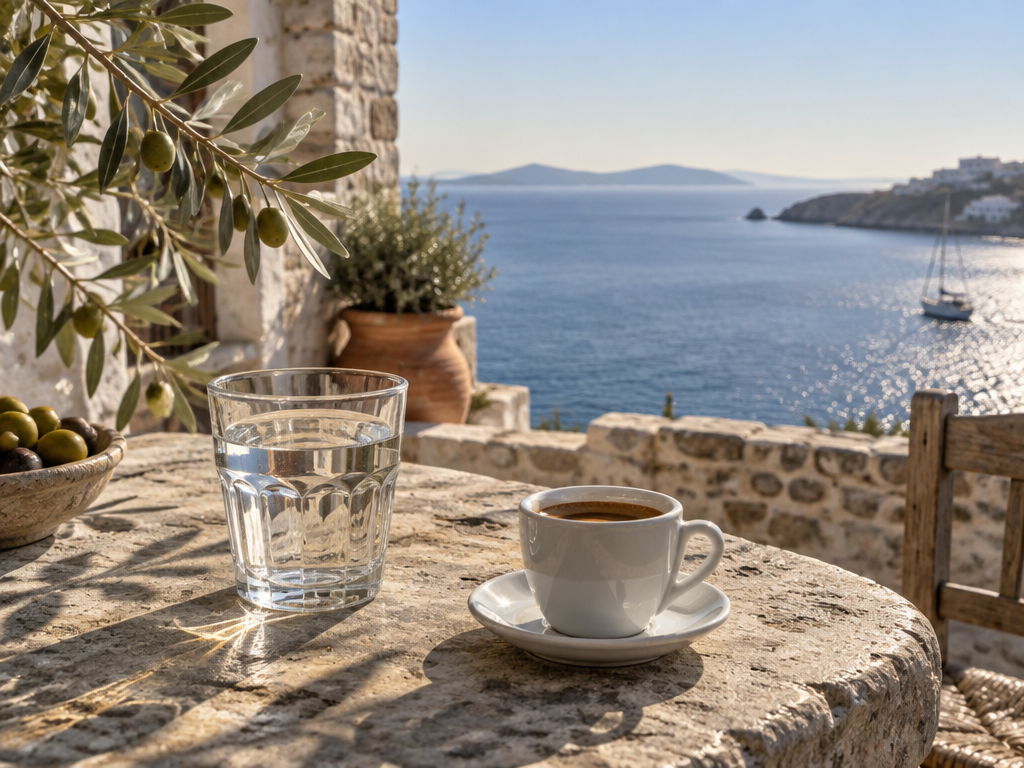 AI-generated image
Many of us start the day with a phone and a coffee. Neither is harmful in itself, but the first hours are also a chance to give the body a clear signal: it is daytime.
The “Day in rhythm” series summarises practical ideas presented by neuroscientist Andrew Huberman in his podcasts, placed in the context of the wider research literature. It is not a strict protocol but a framework to adapt to your life.
1. A glass or two of water before coffee
After the night the body is mildly dehydrated. A glass or two of water on waking helps many people feel more alert and avoid an afternoon headache. Even mild dehydration is linked in studies to lower mood and concentration.
Coffee is not forbidden — it simply need not come first. Some prefer to delay it by half an hour or an hour; evidence for a strict delay rule is modest, so notice what suits you.
- A glass of water by the bed makes the habit easier.
- A pinch of salt or electrolytes mainly makes sense with heavy sweating or training, not for everyone (e.g. with high blood pressure, ask your doctor).
2. Daylight in the first hour
Light is the strongest signal for the internal clock. Morning light helps set the circadian rhythm, which shows in the evening as well: sleepiness arrives on time. This is one of the better researched findings in chronobiology.
Five to ten minutes outside on a clear day, or 15–30 minutes when overcast, is a sensible start. Light through a window is much weaker. Never look directly at the sun.
3. Movement in the first hours
Morning movement — a walk, light exercise or strength training — improves alertness and mood for many people. For health, regular movement matters more than the time of day; mornings are often simply the easiest slot.
The aim of morning exercise is not exhaustion. Controlled movement, sensible volume and respect for any injuries matter more than intensity.
Frequently asked questions
- Do I really have to delay coffee?
- Not necessarily. Evidence for a strict rule is limited. It matters more not to drink coffee late in the afternoon, as it can disturb sleep.
- What if it is still dark in winter mornings?
- Go outside once it is light, or use a bright light lamp. For mood or eye problems, consult a professional.
- Is this medical advice?
- No. This article is general information and does not replace a consultation with a doctor.
Guides cover general principles. Translating them to your own data starts with an introductory consultation and triage (€150, 45 minutes) — it results in a written proposal for the measurement scope, with no obligation.