My four-day training system for strength, conditioning and longevity
Pull, push, legs and a dedicated longevity day — clear enough for progress, flexible enough for real life.
Denis Čurčić
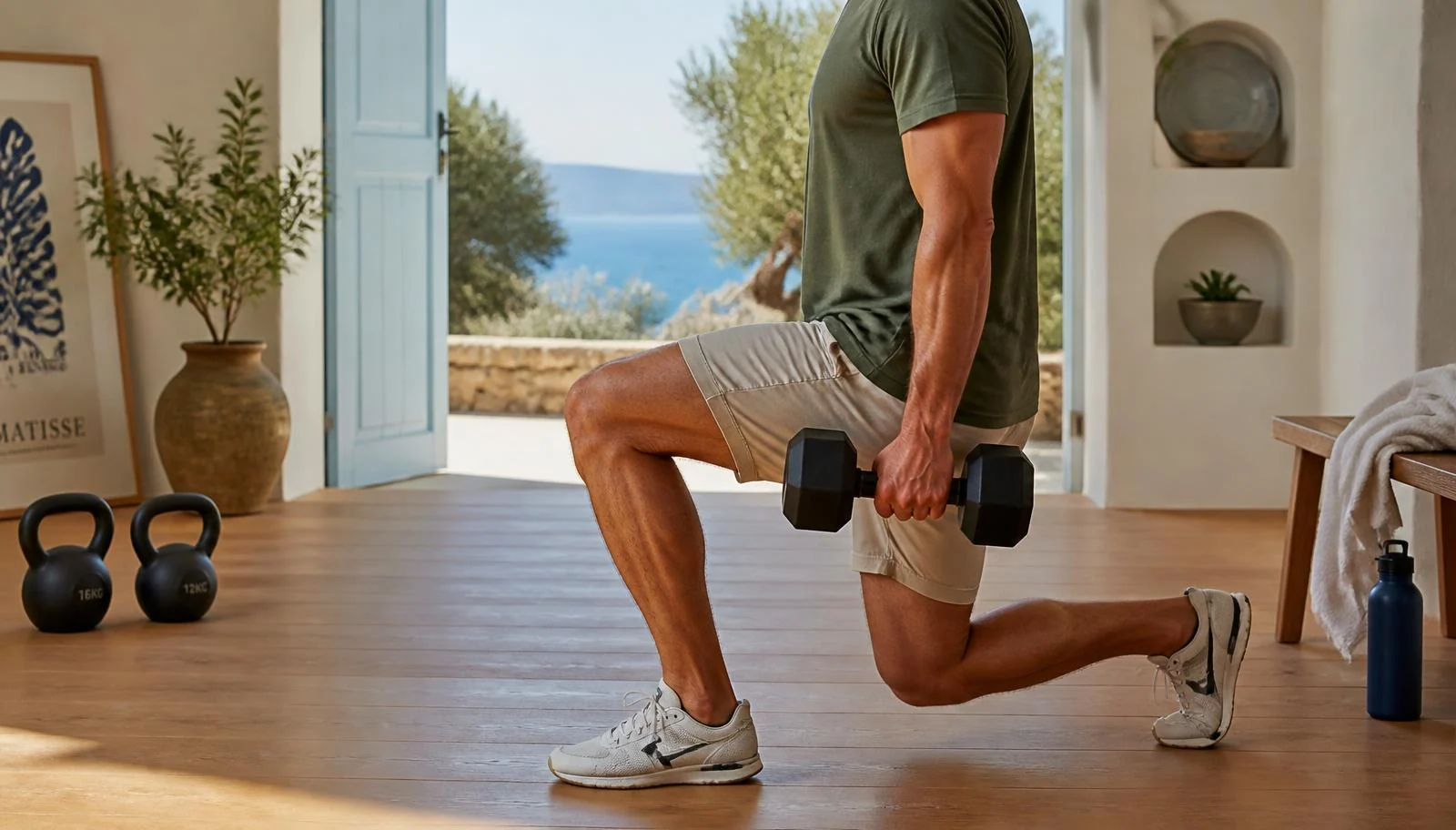 AI-generated image
I built the programme around four clear jobs. The first three days develop basic strength through pull, push and legs. Day four covers qualities a conventional gym plan often misses: carrying, hanging, trunk stability, back and neck work.
This is my personal training log, not a template to copy without assessing your readiness. Loads, volume and technique must reflect experience, injuries and goals.
Day 1 — pull: back, rear delts and biceps
The pull day covers vertical and horizontal pulling, rear delts, two biceps patterns, shoulder stability and trunk rotation. Most movements have an alternative so the plan survives a busy gym or a change in how I feel.
- Lat pulldown or pull-ups.
- Seated row or bent-over barbell row.
- Reverse fly or bent-over dumbbell raise.
- External shoulder rotation and a rotational core exercise.
Day 2 — push: chest, shoulders and triceps
Horizontal and incline presses form the base, followed by chest isolation, shoulder press and lateral raises. Two triceps exercises complete the upper-body work, while lower abs have a defined place.
- Chest press or barbell bench press.
- Incline machine press or dumbbells.
- Pec deck or dumbbell fly.
- Shoulder press, lateral raise and two triceps patterns.
Day 3 — legs and glutes
The third day combines hamstring and quadriceps isolation with compound movements. Hip thrusts, Romanian deadlifts and unilateral work build hip control, stability and raw leg strength.
- Leg curl or ball hamstring curl.
- Hack squat/leg press or front squat.
- Hip thrust and Romanian deadlift.
- Single-leg press or Bulgarian split squat; core finish.
Day 4 — longevity, core and neck
The fourth day is shorter and functional: farmer's carries, dead hangs, planks, step-ups, controlled back work and direct neck work.
| Part | Duration | Example |
|---|---|---|
| Warm-up | 5 min | Easy walk at 5–6 km/h, no incline |
| Steady state | 25–30 min | Treadmill, rower or stair machine |
| Cool-down | 5 min | Slow walk and dead hang |
Speeds, incline and resistance are personal examples. Adapt intensity to your fitness and professional assessment where needed.
Frequently asked questions
- Is this suitable for a beginner?
- Not necessarily in this form. A beginner needs lower volume, technique instruction and suitable loads under professional guidance.
- What does OR mean between exercises?
- It is an alternative, not another mandatory exercise. I choose the version that makes sense that day.
- How much rest is there between days?
- I adapt the schedule to recovery and weekly obligations, avoiding another heavy session for the same muscles before they recover.
Guides cover general principles. Translating them to your own data starts with an introductory consultation and triage (€150, 45 minutes) — it results in a written proposal for the measurement scope, with no obligation.